Here’s a question that trips up even seasoned marketers: “We’re doing digital marketing, so we’re doing performance marketing too, right?”
Not exactly. And that one misunderstanding is why a lot of businesses either overspend, under-measure, or wonder why their “marketing” isn’t converting into actual customers.
Let’s fix that — with real examples, no jargon overload.
First, the One-Line Version
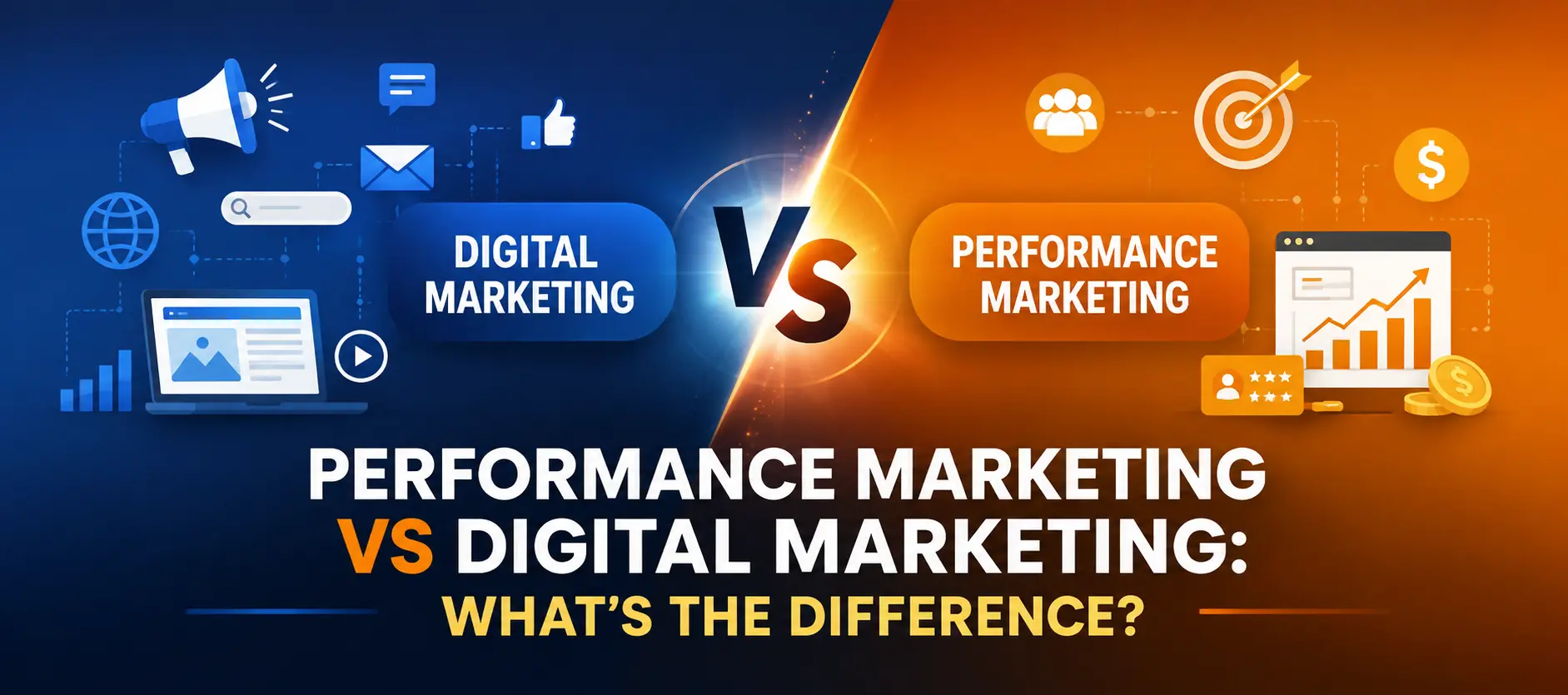
Digital marketing is the entire universe of marketing done online. Performance marketing is one galaxy inside that universe — the part where you only pay for actual results.
Every performance marketing campaign is digital marketing. But not every digital marketing campaign is performance marketing.
Still fuzzy?
Let’s break it down properly.
What is Digital Marketing? (The Umbrella)
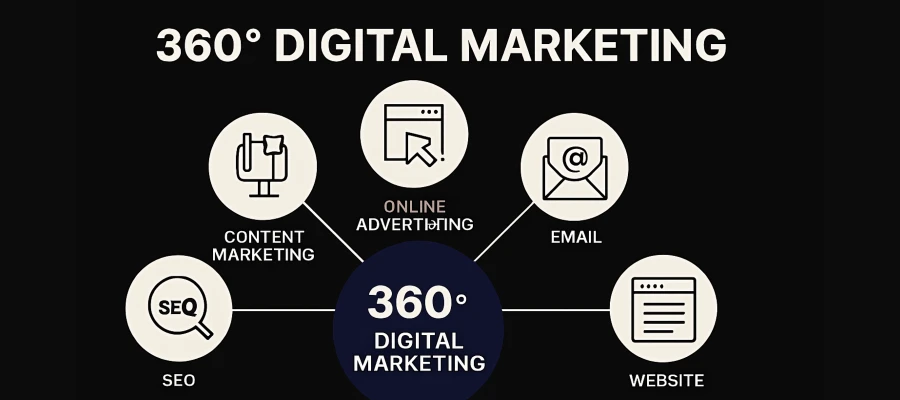
Digital marketing is any marketing effort that happens through digital channels — websites, search engines, social media, email, apps.
It includes things like:
- SEO (ranking on Google organically)
- Social media marketing (building a brand presence, posting content)
- Content marketing (blogs, videos, newsletters)
- Email marketing
- Branding campaigns
- Paid ads (yes, this overlaps with performance marketing too)
The goal here is often broad: build awareness, build trust, build a brand people recognize and like. Success isn’t always instantly measurable in rupees or dollars — sometimes it’s measured in reach, engagement, or brand recall.
Think of digital marketing as planting a garden. You’re not expecting fruit tomorrow. You’re building soil, watering consistently, and playing the long game.
What is Performance Marketing? (The Specialist)
Performance marketing is a type of digital marketing — but with one non-negotiable rule: you pay only when a specific action happens.
That action could be:
- A click
- A lead (someone filling a form)
- A sale
- An app install
- A sign-up
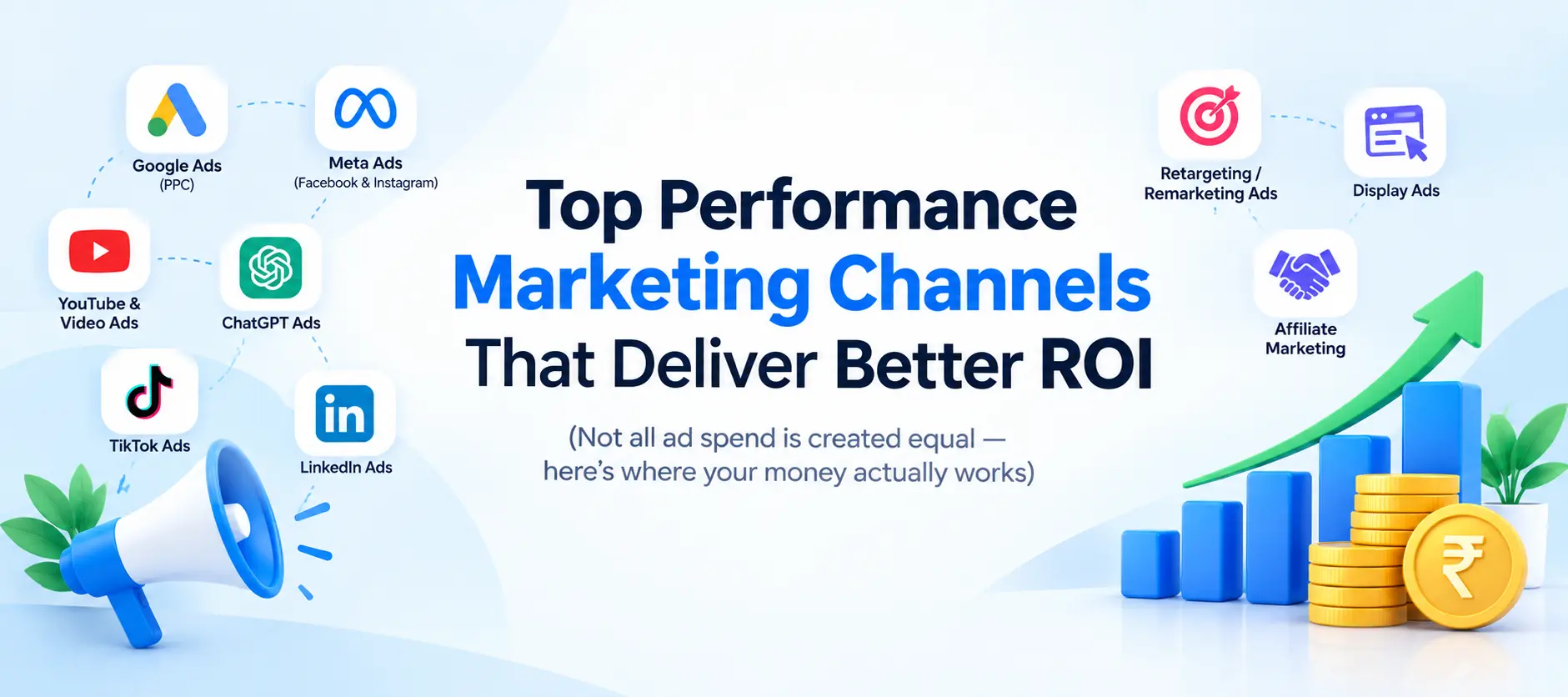
Common performance marketing channels:
- Google Ads (Pay-Per-Click)
- Facebook/Instagram Ads (Meta Ads)
- Affiliate marketing
- Programmatic display ads
- Retargeting campaigns
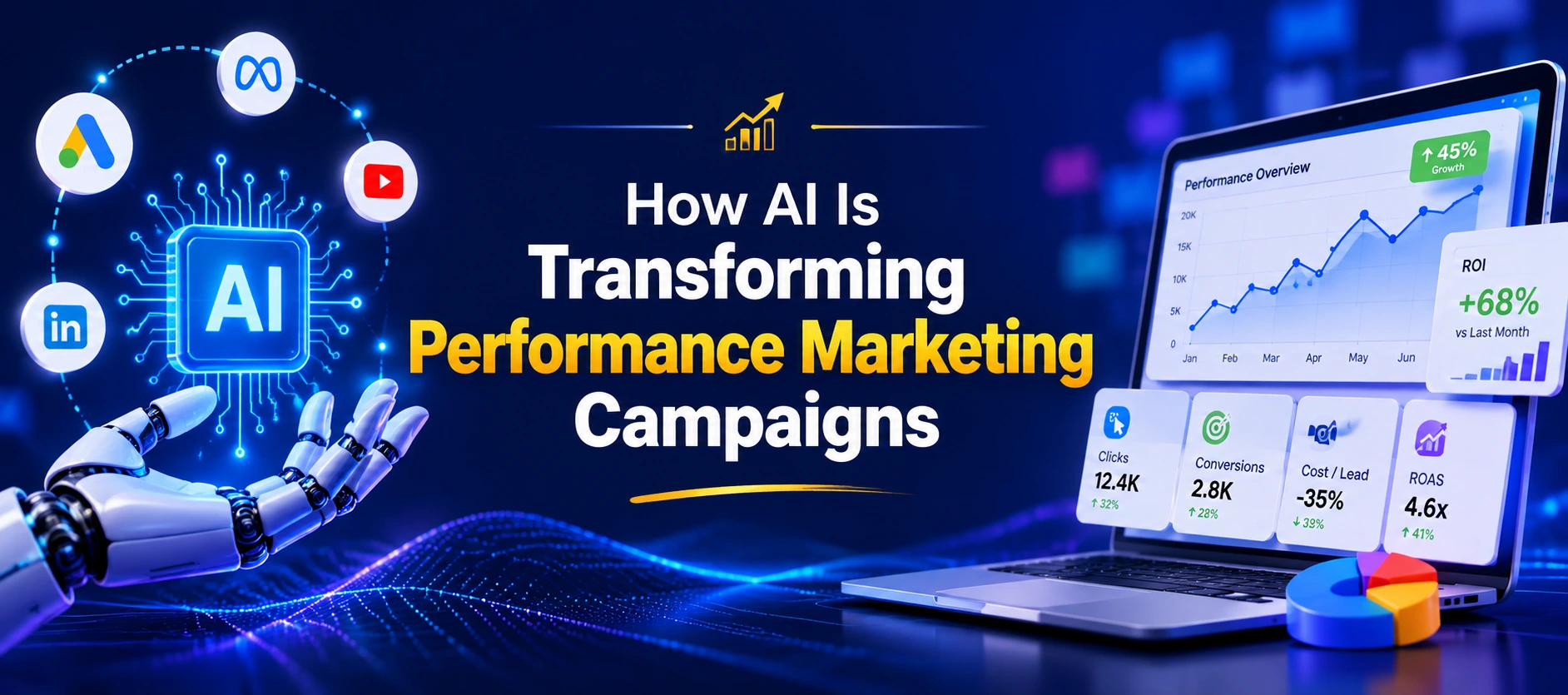
Everything here is tracked, tested, and optimized in real time. If an ad isn’t converting, you kill it. If one is converting like crazy, you pour more budget into it. It’s marketing with a scoreboard running 24/7.
Think of performance marketing as ordering food from a delivery app. You want it now, you’re paying for a specific outcome (a hot meal at your door), and you’ll immediately notice if it doesn’t show up.
The Real Difference, Side by Side
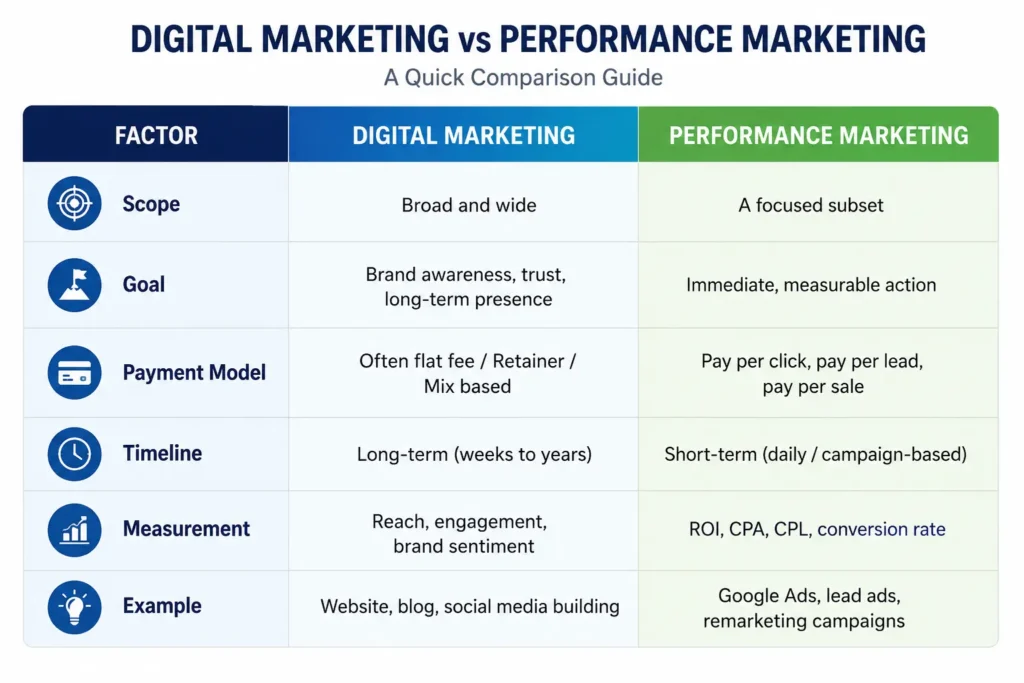
A Simple Example to Make It Click
Imagine you run a D2C skincare brand.
Digital marketing looks like:
- Posting skincare tips on Instagram every day
- Publishing a blog on “5 Signs Your Skin Needs a Routine Change”
- Building an email list with a welcome newsletter series
- Ranking your website for “best skincare for oily skin” on Google
None of this guarantees a sale today. But over months, it builds an audience that trusts your brand.
Performance marketing looks like:
- Running a Meta ad targeting people who searched “acne serum” with a “Buy Now, 20% Off” offer
- Tracking that ₹500 spent on that ad brought in 3 sales worth ₹3,000
- Killing the ad that got clicks but zero sales, and doubling budget on the one that converted
See the difference? One is nurturing the relationship. The other is closing the deal — and proving exactly what it cost to close it.
The magic happens when they work together: your content and brand-building (digital marketing) make people trust the brand, and your ads (performance marketing) catch them at the exact moment they’re ready to buy.
Ready to turn your marketing into measurable growth?
Whether you’re looking to increase brand awareness, generate qualified leads, or maximize your ROI, we’ll help you build a strategy that works.
Which One Should You Invest In?
Here’s a straightforward way to decide — ask yourself three questions:
- Do people know who you are?
If not, don’t jump straight to performance ads. You’ll be paying to convert strangers, and strangers convert poorly. Build some brand presence first.
- Do you have something measurable to sell?
A clear product, service, or lead form? Performance marketing thrives on clear conversion points. If your goal is fuzzy (“get more visibility”), that’s digital marketing’s job.
- What’s your timeline?
Need results this month? Lean performance. Building something for the next 3 years? Lean digital (with performance layered in later).
The honest answer for most businesses: you need both, in the right ratio for your stage. A new brand might go 70% digital marketing (build trust) / 30% performance (test early demand). A brand with strong recognition might flip that to 30/70 — the trust is already built, now it’s time to convert at scale.
Also Read > Why Is Digital Marketing Essential for Business Success?
The One Mistake to Avoid
The biggest mistake businesses make? Judging digital marketing efforts using performance marketing metrics.
If you post a brand story on Instagram and it doesn’t get you 10 direct sales in 24 hours, that doesn’t mean it failed. That’s not what it was built to do. Judge each by the right yardstick — brand-building by trust and recall, performance by ROI and conversions.
Quick Recap
- Digital marketing = the whole toolkit (SEO, content, social, email, ads — everything online)
- Performance marketing = the results-only slice of that toolkit, where you pay for outcomes, not effort
- Both need each other — one builds the audience, the other converts it
- Match your metric to your method — don’t measure a marathon like it’s a sprint
Whether you’re a founder figuring out where to put your first $1,000 in marketing, or a brand deciding how to scale, understanding this difference isn’t just theory. It’s the difference between spending on marketing and investing in it.
Still unsure where to invest your marketing budget?
Every business has different goals, audiences, and growth challenges.
Book a free consultation, and we’ll help you choose the right strategy to maximize your marketing investment.