
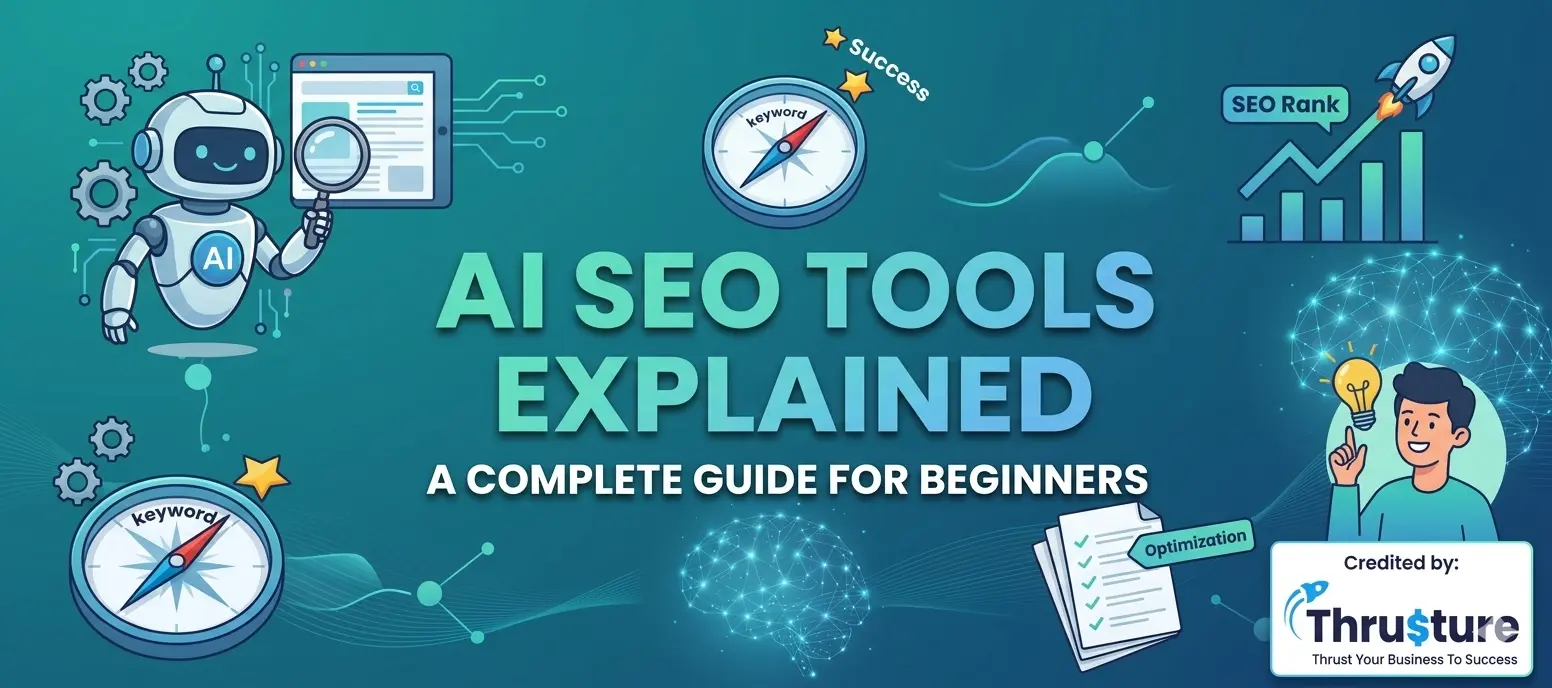
The AI Revolution in SEO: How We Got Here
Not long ago, SEO was a grind. You’d manually research keywords using basic spreadsheets, write content hoping it would rank, build backlinks one email at a time, and wait weeks — sometimes months — to see whether any of it worked. The feedback loop was painfully slow, and the margin for error was wide.
“Then AI arrived and it didn’t just knock on the door of SEO. It kicked it off its hinges.“
The turning point wasn’t subtle. When large language models like GPT and Google’s own AI systems became mainstream, search engines began fundamentally changing how they understand and rank content. Google’s AI Overviews (previously Search Generative Experience) started appearing at the top of search results, synthesizing answers from multiple sources instead of just listing blue links. ChatGPT began sending referral traffic. Perplexity became a real search alternative. Suddenly, SEO wasn’t just about ranking on page one — it was about being cited by AI systems that millions of people trust for answers.
According to BrightEdge’s 2025 research, over 68% of enterprise marketers reported that AI had fundamentally changed their SEO workflows within two years. The professionals who adapted quickly didn’t just survive the shift they thrived. Those who didn’t lost significant organic visibility.
“The rise of AI in SEO is not a trend. It’s the new baseline.”
You may also want to know how to get featured inside ChatGPT & AI answers.
Why Speed Is the New SEO Superpower
Here’s an uncomfortable truth that most SEO guides don’t say clearly enough: in 2026, the biggest competitive advantage isn’t knowledge — it’s execution speed.
Think about it. SEO fundamentals are publicly documented. Google’s Quality Rater Guidelines are free. Keyword research methodology is taught everywhere. The gap between good and great SEOs is no longer about knowing what to do, it’s about doing it faster, more consistently, and at a greater scale.
“This is where AI tools become essential, not optional.“
Consider a typical content audit for a 500-page website. Manually reviewing each page for keyword targeting, internal linking opportunities, content gaps, and optimization improvements would take skilled SEO weeks. An AI-assisted workflow can compress that into days or sometimes hours.
The same is true for:
- Keyword research: AI tools can cluster thousands of keywords by search intent in minutes, a task that used to take days with manual grouping.
- Content creation: AI drafting tools produce optimized first drafts that give writers a strong starting point instead of a blank page.
- Technical audits: AI-powered crawlers identify site issues with greater pattern recognition than legacy tools.
- Competitor analysis: AI can synthesize competitor content strategies across hundreds of pages simultaneously.
- Reporting: Automated insights replace hours of data wrangling in spreadsheets.
“The professionals winning in SEO today are not working harder, they are working with better leverage. AI tools are that leverage.“
A 2025 Semrush survey found that SEO professionals using AI tools saved an average of 12.5 hours per week compared to those using traditional workflows. That’s a full working day and a half every single week that can be redirected toward strategy, client communication, and growth.
Do you also want to save SEO development efforts?
10 AI SEO Tools Every Beginner Should Know
Here is an honest, practical breakdown of the ten most impactful AI SEO tools available today. These aren’t ranked by popularity, they’re selected based on real-world utility for people building their SEO skill set.
1. Semrush — The All-in-One SEO Platform with AI at its Core
Best for: Professionals who want one platform to handle most of their SEO workflow.
Semrush has been around since 2008, but its AI integration in recent years has transformed it from a good tool into a genuinely exceptional one. At its heart, Semrush is a competitive intelligence platform — it shows you what keywords your competitors rank for, where their backlinks come from, and how their content performs.
Key AI Features:
- SEO Writing Assistant: Analyzes your draft content in real time, scoring it for readability, originality, keyword density, and SEO potential against your top 10 SERP competitors.
- ContentShake AI: Generates complete SEO-optimized blog drafts based on keyword research and competitor analysis.
- AI Keyword Clustering: Groups thousands of related keywords by topic and intent automatically.
- Keyword Magic Tool: Uses AI to suggest long-tail variations with search volume, difficulty, and intent data.
Real Value: Semrush’s AI Writing Assistant is one of the few tools that scores your content against actual current SERP competitors, not generic guidelines. This makes its recommendations grounded in what’s actually working right now — not theory.
Pricing: Plans start at $139.95/month. A free trial is available.
2. Ahrefs — The Backlink Intelligence Leader
Best for: Link building, competitor backlink analysis, and content gap research.
Ahrefs has the largest backlink database in the industry, with over 35 trillion known links. Its AI enhancements have made an already powerful tool even more insightful — particularly for understanding why certain pages rank and what you’d need to outrank them.
Key AI Features:
- AI Content Grader: Compares your content’s topical depth against top-ranking pages and suggests specific areas to expand.
- Keyword Difficulty AI Scoring: Uses machine learning to estimate how many backlinks you’d realistically need to rank for a given keyword.
- AI-Powered Broken Link Opportunities: Automatically identifies high-value broken link building opportunities across competitors.
- Explorer: Finds the most shared and linked content in any niche, helping you identify what works before you invest in creation.
Real Value: Ahrefs is the tool SEOs use when they want to understand the competitive link landscape with precision. Its AI scoring for keyword difficulty is notably more accurate than older volume-based models because it factors in content quality signals.
Pricing: Plans start at $129/month.
3. Surfer SEO — The Content Optimization Engine
Best for: On-page SEO optimization and data-driven content writing.
Surfer SEO is built around one core idea: rank better by understanding exactly what top-ranking pages have in common, then matching and exceeding it. Its AI analyzes over 500 on-page factors across your target SERP and translates them into actionable writing guidelines.
Key AI Features:
- Content Editor: Gives you a real-time score (0–100) as you write, with specific guidance on keyword usage, headings, word count, and paragraph structure.
- Surfer AI: Generates full article outlines and drafts calibrated specifically to your target keyword and SERP.
- SERP Analyzer: Breaks down ranking factors across the top 20 results for any keyword.
- Keyword Research: Clusters keywords into content groups, helping you plan pillar and supporting pages.
- Audit Tool: Analyzes existing pages and provides a prioritized list of improvements.
Real Value: Surfer’s Content Editor is one of the most tactically useful writing companions in SEO. Unlike generic AI writers, it doesn’t just produce content — it produces content calibrated against your specific keyword competition.
Pricing: Plans start at $99/month.
4. ChatGPT (with SEO-focused prompting) — The Versatile Thinking Partner
Best for: Ideation, content drafting, meta descriptions, structured data schemas, and creative SEO problem-solving.
It might seem too obvious to list ChatGPT here, but many beginners underestimate how powerful it becomes when used with deliberate, SEO-specific prompts. ChatGPT is not an SEO tool in the traditional sense, it doesn’t have a keyword database or rank tracker, but it is an extraordinarily capable SEO collaborator.
Key SEO Applications:
- Generating 50+ LSI keyword variations from a seed keyword
- Writing and A/B testing title tags and meta descriptions at scale
- Creating FAQ sections optimized for voice search and featured snippets
- Generating schema markup (JSON-LD) for articles, products, and local businesses SEO
- Auditing content for E-E-A-T signals (Experience, Expertise, Authoritativeness, Trustworthiness)
- Drafting outreach emails for link building campaigns
Real Value: The hidden superpower of ChatGPT for SEO is its ability to help you think structurally. Use it to brainstorm content angles competitors haven’t covered, identify audience pain points in your niche, or stress-test whether your content plan actually addresses search intent.
Pricing: Free tier available. ChatGPT Plus at $20/month unlocks GPT-4o and more advanced capabilities.
5. Jasper AI — The Enterprise Content Creation Platform
Best for: Teams producing high volumes of SEO content with brand consistency.
Jasper is purpose-built for marketing teams. Where ChatGPT is a flexible generalist, Jasper is a specialized content production system with SEO features embedded throughout its workflow. Its Brand Voice feature — which learns your company’s tone, terminology, and style from existing content makes it particularly valuable for enterprises that need AI-generated content to feel consistent.
Key AI Features:
- SEO Mode (integrated with Surfer SEO): Write with real-time on-page optimization guidance inside the Jasper editor.
- Brand Voice: Train Jasper on your existing content so AI drafts match your established style.
- Campaign Templates: Pre-built workflows for blog posts, landing pages, ad copy, and email sequences.
- Knowledge Base: Feed Jasper your product docs, style guides, and brand assets to ensure accuracy.
- AI Image Generation: Create blog graphics within the same platform.
Real Value: For solo freelancers, Jasper may feel expensive. For agencies or in-house teams producing 50+ pieces of content per month, the time savings and consistency gains make it a strong ROI play.
Pricing: Plans start at $49/month for individuals, with team plans from $125/month.
6. Frase.io — The Research-to-Ranking Pipeline
Best for: Beginners who want a guided, step-by-step content workflow.
Frase is often recommended as the most beginner-friendly AI SEO content tool because it walks you through the entire process — from keyword research to brief creation to content writing to optimization — in a single, intuitive interface. Unlike tools that require you to already understand SEO to use effectively, Frase explains why it makes each recommendation.
Key AI Features:
- SERP Research: Automatically pulls and summarizes the top 20 search results for your keyword, giving you a research brief in seconds.
- Content Brief Builder: Generates structured briefs including headings, questions to answer, and topics to cover based on what’s ranking.
- AI Writer: Produces content directly within the brief, so you never lose context while writing.
- Optimization Score: Tracks how well your draft covers the topics common across top-ranking competitors.
- Question Research: Aggregates “People Also Ask” and forum questions to help you cover a topic exhaustively.
Real Value: Frase dramatically reduces the research phase of content creation. What used to take 2–3 hours of SERP analysis can be condensed into 15 minutes, letting writers focus their energy on adding original insights rather than structural research.
Pricing: Plans start at $45/month.
7. Google Search Console (with AI Interpretation) — The Non-Negotiable Foundation
Best for: Understanding your actual search performance data — free.
Google Search Console (GSC) is not an AI tool in the way the others on this list are, but it is the most important free data source in SEO and increasingly, AI tools like ChatGPT and Gemini can help beginners interpret its data in ways that would previously have required an experienced analyst.
Key Features:
- Exact queries users typed to find your pages
- Click-through rates by keyword and page
- Average ranking positions
- Core Web Vitals (page experience signals)
- Index coverage issues
- Google Discover and News performance
How AI Enhances GSC: Export your GSC data as a CSV and feed it into ChatGPT or Gemini with a prompt like: “Analyze this search performance data and identify my top 10 keyword opportunities where my CTR is below the industry average for that position, and suggest title tag improvements.” What used to require an advanced spreadsheet analyst can now be done by a beginner with the right AI prompt.
Real Value: GSC data is ground truth. It shows you exactly how Google sees your site. Every other tool on this list is making educated estimates — GSC gives you actual data from Google’s systems.
Pricing: Free.
8. Alli AI — The Technical SEO Automation Layer
Best for: Automating technical SEO changes across large websites without developer dependency.
One of the most significant bottlenecks in enterprise SEO is the gap between identifying technical issues and getting them fixed. Developers have long backlogs, and SEO changes frequently don’t get prioritized. Alli AI solves this by allowing SEOs to implement technical changes — title tags, meta descriptions, schema markup, internal links — directly to a website through a JavaScript snippet, without touching the CMS or waiting for developer time.
Key AI Features:
- Bulk On-Page Changes: Update meta tags, headings, and alt text across thousands of pages at once.
- A/B Testing for SEO: Test different title tag or meta description variations and measure ranking impact.
- AI-Generated Schema: Automatically generate and deploy structured data markup.
- Internal Link Automation: AI identifies and inserts contextually relevant internal links across your content.
- Site Speed Recommendations: AI-driven technical audit with implementation suggestions.
Real Value: Alli AI is genuinely transformative for agencies managing large client sites or in-house teams at companies with slow development cycles. The ability to deploy SEO changes without a developer is a competitive advantage that directly accelerates results.
Pricing: Plans start at $299/month (enterprise-focused).
9. Perplexity AI — The AI Search Engine You Need to Understand
Best for: Understanding how AI search engines discover, cite, and present information.
Perplexity AI is itself an AI-powered search engine but it belongs on this list because understanding how Perplexity works is increasingly important for SEO professionals. Perplexity cites its sources visibly, making it one of the best tools for researching what content is actually being surfaced by AI search systems for your target queries.
Key SEO Applications:
- Research competitor content that AI search engines are currently citing for your target keywords
- Understand how AI summarizes topics in your niche, revealing content gaps in your own strategy
- Identify what sources (publications, formats, authority sites) AI systems trust in your industry
- Use Perplexity Pro’s web search capabilities for real-time competitor and content research
Real Value: Most SEOs focus on Google. The ones who will win the next five years are also optimizing for visibility in Perplexity, ChatGPT Search, and Google’s AI Overviews. Using Perplexity as a research tool helps you understand what these systems value.
Pricing: Free tier available. Perplexity Pro at $20/month.
10. NeuronWriter – The Semantic SEO Specialist
Best for: Building topical authority through semantic optimization.
NeuronWriter is a content optimization tool that focuses specifically on semantic SEO — the practice of comprehensively covering the full range of concepts related to a topic, rather than just targeting individual keywords. As Google’s understanding of language has become more sophisticated through AI, semantic completeness has become a major ranking factor.
Key AI Features:
- NLP-Powered Recommendations: Uses natural language processing to identify semantically related terms your content should include.
- Content Scoring: Scores your content against competitors on semantic coverage.
- AI Writer with Research: Generates content based on SERP analysis and NLP data simultaneously.
- Internal Linking Suggestions: Recommends internal links based on semantic relevance.
- SERP Competitor Analysis: Deep-dives into what top-ranking pages cover that yours doesn’t.
- Google Search Console Integration: Connects to your GSC data for performance-informed optimization.
Real Value: NeuronWriter is arguably the best value-for-money tool on this list. At a fraction of the cost of Surfer SEO, it delivers comparable semantic optimization capabilities — making it a strong choice for beginners and budget-conscious professionals.
Pricing: Plans start at $23/month.
The Authenticity Edge: What AI Tools Can’t Replace
Here’s something that needs to be said clearly, because too many AI SEO guides skip it:
“AI tools are multipliers, not replacements for genuine expertise and original perspective.“
The content that wins in 2026 in both traditional search and AI-generated results is content that demonstrates real experience, real expertise, and real perspective. Google’s E-E-A-T framework (Experience, Expertise, Authoritativeness, Trustworthiness) was explicitly designed to reward content that a machine couldn’t have produced alone.
Consider the difference between these two approaches to an article about the best hiking boots:
AI-only approach: Aggregates reviews from multiple sources, lists features, compares prices. Technically accurate but fundamentally derivative it is a synthesis of what already exists.
Human + AI approach: An experienced hiker uses AI to research keyword opportunities and structure their outline, then writes from genuine experience describing how a specific boot performed on a wet granite descent in poor conditions, what blisters they got, and what they’d do differently. AI handles the research scaffold; human experience fills the structure with irreplaceable truth.
The second approach ranks better, earns more backlinks, gets cited by AI systems, and builds an audience. The first approach is forgettable and increasingly filtered out by Google’s Helpful Content systems.
Practical authentication strategies:
- Include original data from your own experiments, surveys, or case studies
- Add photos or screenshots from your actual work or experience
- Cite specific dates, numbers, and outcomes from real projects
- Share opinions that are counterintuitive or challenge conventional wisdom
- Reference your own mistakes and what they taught you
“Use AI to produce the framework. Use your humanity to make it worth reading.”
Why You Must Optimize for AI Search Results — Not Just Google
This section may be the most important one in this guide for the next few years.
The way people search for information is changing rapidly. Traditional search typing a query and clicking a blue link is no longer the only game in town. Here’s what the landscape looks like in 2026:
Google AI Overviews now appear for a significant percentage of informational queries, that is why AI SEO Services for businesses play an important role for boosting the AI search visibility and increasing the number of leads. These AI-generated summaries appear above traditional search results and pull information from web sources, which they cite. If your content is cited in an AI Overview, you receive high-visibility exposure, but the traffic dynamics are different from a traditional ranking. Users may read the overview and never click to your site, or they may click specifically because your site was cited as an authority.
ChatGPT Search has become a meaningful traffic source for publishers with strong brand authority and well-structured content. OpenAI has confirmed that ChatGPT is used by hundreds of millions of people monthly, and its search functionality is increasingly directing users to specific web sources.
Perplexity AI generates citations visible to users and has been reported by various publishers to send qualified referral traffic users who click through from Perplexity tend to be highly engaged.
Google Gemini and Microsoft Copilot incorporate web search results into AI-generated answers, creating additional citation opportunities for authoritative content.
How to Optimize for AI Citations and AI Search Visibility
1. Structure your content for AI comprehension
Use clear headings, concise definitions, and direct answers to questions. AI systems extract information more easily from well-organized content. FAQ sections are particularly valuable.
2. Use schema markup extensively
Structured data helps AI systems understand your content’s purpose, entities, and relationships. Article schema, FAQ schema, HowTo schema, and Organization schema are all valuable.
3. Build genuine topical authority
AI systems are more likely to cite sources that demonstrate comprehensive, accurate coverage of a topic over time. A site with 50 deeply researched, interconnected articles on a niche will be cited more than a site with 500 thin posts.
4. Prioritize factual accuracy and citations
AI search systems are increasingly sensitive to misinformation. Content that cites credible sources, includes verifiable data, and maintains factual accuracy is more likely to be trusted and surfaced.
5. Maintain a strong brand signal
When people search for your brand by name in ChatGPT or Perplexity, what do they find? Actively building brand mentions, reviews, and references across the web helps AI systems understand that you are an established authority.
6. Optimize for conversational queries
AI search systems handle natural language queries better than traditional search. Include full questions as headings (e.g., “What is the best AI tool for keyword research?”) and answer them directly and completely.
The SEOs who are building for AI search visibility right now in addition to traditional Google optimization are positioning themselves years ahead of competitors who haven’t made this shift yet.
Summary: What You’ve Learned and Where to Go Next
Let’s bring everything together.
SEO has been fundamentally transformed by artificial intelligence — both in how search engines work and in the tools available to practitioners. The professionals winning today aren’t the ones with the most SEO knowledge. They’re the ones combining solid fundamentals with AI-powered tools and executing at a speed that manual workflows simply cannot match.
The 10 tools covered in this guide
| Tool | Primary Strength | Best For |
|---|---|---|
| Semrush | All-in-one platform | Full workflow management |
| Ahrefs | Backlink intelligence | Link building & competition |
| Surfer SEO | On-page optimization | Content scoring & calibration |
| ChatGPT | Flexible AI collaboration | Ideation & content drafting |
| Jasper AI | Enterprise content at scale | Large teams, brand consistency |
| Frase.io | Research-to-content pipeline | Beginners, guided workflow |
| Google Search Console | Ground-truth performance data | Understanding real rankings |
| Alli AI | Technical SEO automation | Large sites, no-dev changes |
| Perplexity AI | AI search understanding | Research & citation analysis |
| NeuronWriter | Semantic SEO | Topical authority & NLP |
The core principles to carry forward
- AI tools amplify your output but your expertise, experience, and genuine perspective are what make that output worth reading.
- Speed matters more than ever. Use AI to compress research, drafting, and optimization timelines.
- Optimize not just for Google, but for AI-driven search surfaces: AI Overviews, ChatGPT Search, and Perplexity.
- Authenticity, original data, real experience, and honest opinion is the content that AI cannot replicate.
- Start with free tools (Google Search Console, ChatGPT free tier) before investing in premium platforms.
The beginner who starts learning SEO today with AI tools has capabilities that senior SEOs didn’t have five years ago. That’s an extraordinary advantage as long as you use it to do better work, not just faster work.
The future of SEO belongs to humans and AI working together. Get started.
“Have questions about any of these tools or want help building your AI SEO workflow? “

1 Comment