
Introduction: Why Businesses Need a 360-Degree Marketing Approach Today
In today’s fast-paced digital world, where consumers are bombarded with information from every direction, businesses can’t afford to play it safe with outdated marketing tactics. Imagine trying to reach your audience through just one channel like relying solely on TV ads in an era where people spend hours scrolling on their phones. It’s not just ineffective; it’s a recipe for being overlooked. That’s where 360-degree marketing comes in. This holistic approach ensures your brand surrounds potential customers with consistent, engaging messages across all touchpoints, both online and offline.
Why is this so crucial now? Well, the marketing landscape has evolved dramatically. With the rise of social media, e-commerce, and AI-driven personalization, customer journeys are no longer linear. A prospect might discover your brand on Instagram, research it via Google, and make a purchase after receiving an email nudge all while influenced by a billboard they saw on their commute. Businesses that adopt a 360-degree marketing strategy aren’t just keeping up; they’re thriving by building deeper connections and driving sustainable growth.
In this blog, we’ll dive into what 360-degree marketing really means, why it matters, and how you can implement it to supercharge your business. Whether you’re a startup founder or a seasoned executive, understanding this approach could be the game-changer your brand needs.
What Is 360-Degree Marketing?
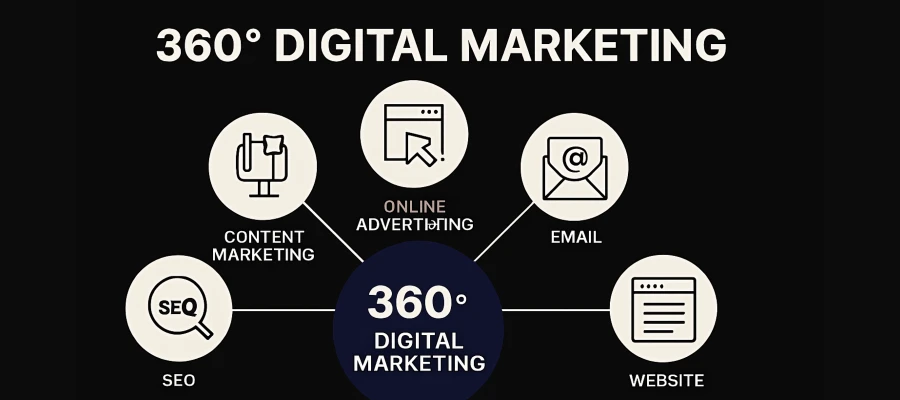
At its core, 360-degree digital marketing is an all-encompassing strategy that integrates every possible channel to create a seamless brand experience. Think of it as wrapping your audience in a bubble of your brand’s message, no matter where they turn, they’re reminded of who you are and what you offer. It’s not about blasting ads everywhere; it’s about crafting a unified narrative that resonates across digital platforms, traditional media, and even real-world interactions.
Simple Definition of 360-Degree Marketing
In simpler terms, it’s like hosting a party where every guest feels personally invited and engaged, regardless of how they arrived. This method ensures that your marketing efforts work together synergistically, amplifying reach and impact rather than operating in silos.
How 360-Degree Marketing Is Different from Traditional Marketing
Traditional marketing often focuses on one-way communication, like print ads or TV commercials, where the brand speaks and the audience listens (or tunes out). It was effective in the pre-internet days when options were limited, but it lacks the interactivity and data insights we have today.
360-degree digital marketing flips the script by being omnichannel and customer-centric. Instead of isolated campaigns, it connects everything: a social media post might lead to a targeted email, which ties into an in-store event. The key difference? It’s dynamic and responsive. Traditional methods might measure success by broad metrics like ad impressions, but 360-degree approaches use real-time data to refine strategies on the fly. Plus, it emphasizes consistency, your brand voice doesn’t change whether it’s on TikTok or a trade show booth building trust in a way fragmented traditional tactics can’t.
Why 360-Degree Marketing Matters for Business Growth
Changing Customer Behavior in the Digital Age
Customers today are savvy, impatient, and multichannel. According to recent studies from 2025, the average person interacts with brands across at least five different platforms before making a purchase. They’ve shifted from passive consumers to active participants, expecting personalized experiences tailored to their needs.
This change demands that businesses adapt. If your marketing isn’t everywhere your customers are, from search engines to social feeds, you’re missing opportunities. 360-degree marketing addresses this by meeting customers where they are, fostering loyalty and turning one-time buyers into advocates. For instance, a Gen Z shopper might start with a viral Reel, while a Boomer prefers email newsletters; ignoring either group limits your growth potential.
Get more insights on Why Is Digital Marketing Essential for Business Success?
The Need for Consistent Brand Messaging Across All Channels
Inconsistency breeds confusion. If your website promises eco-friendly products but your social media ignores sustainability, customers notice and they bounce. Consistent messaging reinforces your brand identity, making it memorable and trustworthy.
A 360-degree approach ensures every channel echoes the same core values, visuals, and tone. This unity not only boosts recognition but also enhances perceived professionalism. Research shows that brands with consistent messaging across channels see up to 23% higher revenue growth. It’s about creating a cohesive story that builds emotional connections, ultimately driving long-term business expansion.
Core Elements of 360-Degree Marketing Solutions
Digital channels form the backbone of 360-degree marketing, offering measurable, scalable ways to engage audiences.
- SEO and Content Marketing: SEO optimizations enhance your online presence so customers find you organically via search engines. Paired with content marketing like blogs, videos, and infographics, it educates and attracts leads. High-quality content positions your brand as an authority, driving traffic and conversions.
- Social Media Marketing: Platforms like Instagram, LinkedIn, and Twitter allow real-time interaction. It’s about building communities, sharing user-generated content, and running targeted campaigns to humanize your brand and spark conversations.
- Paid Advertising (Google Ads, Social Ads): Paid advertising services include Google Ads which target search intent, while social ads use demographics for precision. Together, they complement organic efforts, ensuring your message reaches the right eyes at the right time.
- Email and Marketing Automation: Personalized emails nurture leads through automated sequences. Tools like drip campaigns keep your brand top-of-mind, with open rates soaring when content is relevant.
Offline and Traditional Marketing Touchpoints
Don’t underestimate the power of the physical world in a digital strategy.
- Print Media and Outdoor Advertising: Billboards, flyers, and magazine ads provide tangible reminders. They’re great for local targeting and can drive online traffic via QR codes, blending old and new.
- Events, PR, and Brand Activations: Trade shows, pop-ups, and press releases create buzz. PR builds credibility through media coverage, while activations like experiential events, forge memorable, shareable experiences that amplify online.
How 360-Degree Marketing Works Step by Step
Understanding Business Goals and Target Audience
Start with clarity: What are your objectives, brand awareness, sales, retention? Then, profile your audience using demographics, psychographics, and behavior data. Tools like surveys and analytics help create buyer personas, ensuring your strategy aligns with real needs.
Creating a Unified Marketing Strategy
Map out channels and integrate them. Develop a content calendar that ties themes across platforms. For example, a product launch might involve teaser social posts, email announcements, and in-store demos all under one cohesive message.
Executing Campaigns Across Multiple Channels
Roll out with coordination. Use project management tools to synchronize launches, ensuring timing maximizes impact. Monitor for real-time adjustments, like boosting a viral social post with paid ads.
Tracking Performance and Optimizing Results
Use analytics dashboards (e.g., Google Analytics, HubSpot) to measure KPIs like engagement, conversions, and ROI. Analyze what’s working, iterate, and refine. A/B testing across channels reveals insights for future campaigns.
Key Benefits of 360-Degree Marketing for Businesses
Better Brand Visibility and Recognition
By being omnipresent, your brand becomes unforgettable. Multi-channel exposure increases recall, with studies showing a 30% uplift in visibility for integrated campaigns.
Higher Lead Generation and Sales
Synergistic efforts capture more leads. A customer seeing your ad on Facebook, then retargeted via email, is more likely to convert, often boosting sales by 20-30%.
Improved Customer Experience and Trust
Seamless interactions make customers feel valued. Consistent experiences build trust, leading to higher satisfaction and repeat business.
Data-Driven Marketing Decisions
Aggregated data from all channels provides holistic insights, enabling smarter allocations and predictive strategies.
360-Degree Marketing vs Single-Channel Marketing
Why Single-Channel Marketing Is No Longer Enough
Relying on one channel, like just email, limits reach in a fragmented media landscape. Customers expect variety; single-channel approaches miss cross-platform synergies and fail to adapt to shifting behaviors.
How an Integrated Approach Delivers Better Results
Integration amplifies efforts where social drives traffic to SEO-optimized sites, offline events fuel online buzz. Results? Higher ROI, with integrated campaigns outperforming siloed ones by up to 300% in engagement.
Which Businesses Can Benefit from 360-Degree Marketing?
Startups and Small Businesses
For newcomers, it’s a cost-effective way to build presence quickly, competing with bigger players through smart, targeted multichannel efforts.
Medium and Large Enterprises
These can leverage scale for complex campaigns, maintaining market dominance and innovating customer engagement.
E-commerce, Service-Based, and B2B Companies
E-commerce thrives on digital integration; services benefit from trust-building PR; B2B uses LinkedIn and events for long sales cycles.
Common Challenges in 360-Degree Marketing (and How to Overcome Them)
Budget and Resource Management
Spreading thin is risky. Overcome by prioritizing high-ROI channels and using automation tools to streamline.
Managing Multiple Marketing Channels
Coordination is tough. Use centralized platforms like Asana or integrated software suites for oversight.
Measuring ROI Across Platforms
Attribution is complex. Employ multi-touch models and unified analytics to track contributions accurately.
How to Choose the Right 360-Degree Marketing Partner
Key Factors to Look for in a Marketing Agency
Seek experience in omnichannel strategies, proven case studies, tech-savvy teams, and transparent pricing. Look for creativity balanced with data expertise.
Questions Businesses Should Ask Before Hiring
What’s your process for integration? How do you measure success? Can you share client results? Ensure alignment with your goals.
Real-World Examples of 360-Degree Marketing in Action
Example 1: Travel Industry – SEO + Paid Advertising Growth
Business Type: Travel industry company Case Study
Goal: Increase online visibility, leads, and bookings
360-Degree Marketing Strategy Used:
- SEO to improve organic search rankings
- Paid advertising to capture high-intent travel searches
- Content optimization for destination and service pages
- Landing page optimization for better conversions
- Performance tracking and continuous optimization
Outcome:
The business achieved strong growth in organic traffic and paid campaign performance. Consistent messaging across SEO and ads helped increase qualified leads and improve overall booking inquiries.
Example 2: Automotive Brand – Organic Growth Through Strategic SEO
Business Type: Automotive brand SEO Case Study
Goal: Improve organic visibility and brand authority
360-Degree Marketing Strategy Used:
- In-depth keyword research and competitor analysis
- On-page SEO for category and product pages
- High-quality content creation to target buyer intent
- Technical SEO improvements for site performance
- Analytics tracking to measure and refine results
Outcome:
The brand saw steady growth in organic traffic and keyword rankings. Improved visibility across search engines helped strengthen brand trust and generate consistent inquiries without heavy reliance on paid ads.
Example 3: Heating E-Commerce Portal – SEO-Driven Sales Growth
Business Type: E-commerce portal Case Study (Heating products)
Goal: Increase online sales and product visibility
360-Degree Marketing Strategy Used:
- SEO optimization for product and category pages
- Content marketing to support buying decisions
- Website structure and user experience improvements
- Conversion-focused optimization for key pages
- Ongoing performance monitoring and optimization
Outcome:
The e-commerce portal experienced improved search visibility and higher-quality traffic. Better alignment between SEO, content, and user experience helped boost sales and customer engagement.
A well-planned 360-degree marketing strategy ensures that every channel supports the same business goal, delivering better results than isolated marketing efforts.
“Want to achieve your business goals with Thrusture?“
Future of 360-Degree Marketing in the AI Era
Role of AI, Automation, and Data Analytics
AI predicts trends, automates personalization, and analyzes vast data for insights. Tools like chatbots and predictive analytics make campaigns smarter and more efficient.
Personalization at Scale
AI enables hyper-personalized experiences, like dynamic ads based on behavior, scaling what was once manual to reach millions effectively.
Want to know, Why Businesses Need SEO and Advanced GEO to Compete in the AI Era?
Final Thoughts: Is 360-Degree Marketing Worth It for Your Business?
When to Invest in 360-Degree Marketing Solutions
Invest when single channels plateau, or during expansion phases. If your audience is diverse and digital-savvy, it’s essential.
How to Get Started the Right Way
Audit current efforts, define goals, assemble a team or partner, and launch small-scale tests. Scale based on data, and remember: consistency is key to unlocking its full potential.
Ready to take the leap? Partner with Thrusture to transform your marketing into a seamless, multi-channel growth engine. We’ll help you audit, strategize, and execute with precision, so you don’t just keep up with your audience, you stay ahead of them.
“Let’s turn consistency into measurable success.”